
Stories for Science
Part 2: Seven Basic Plots and a trip to the Rainforest

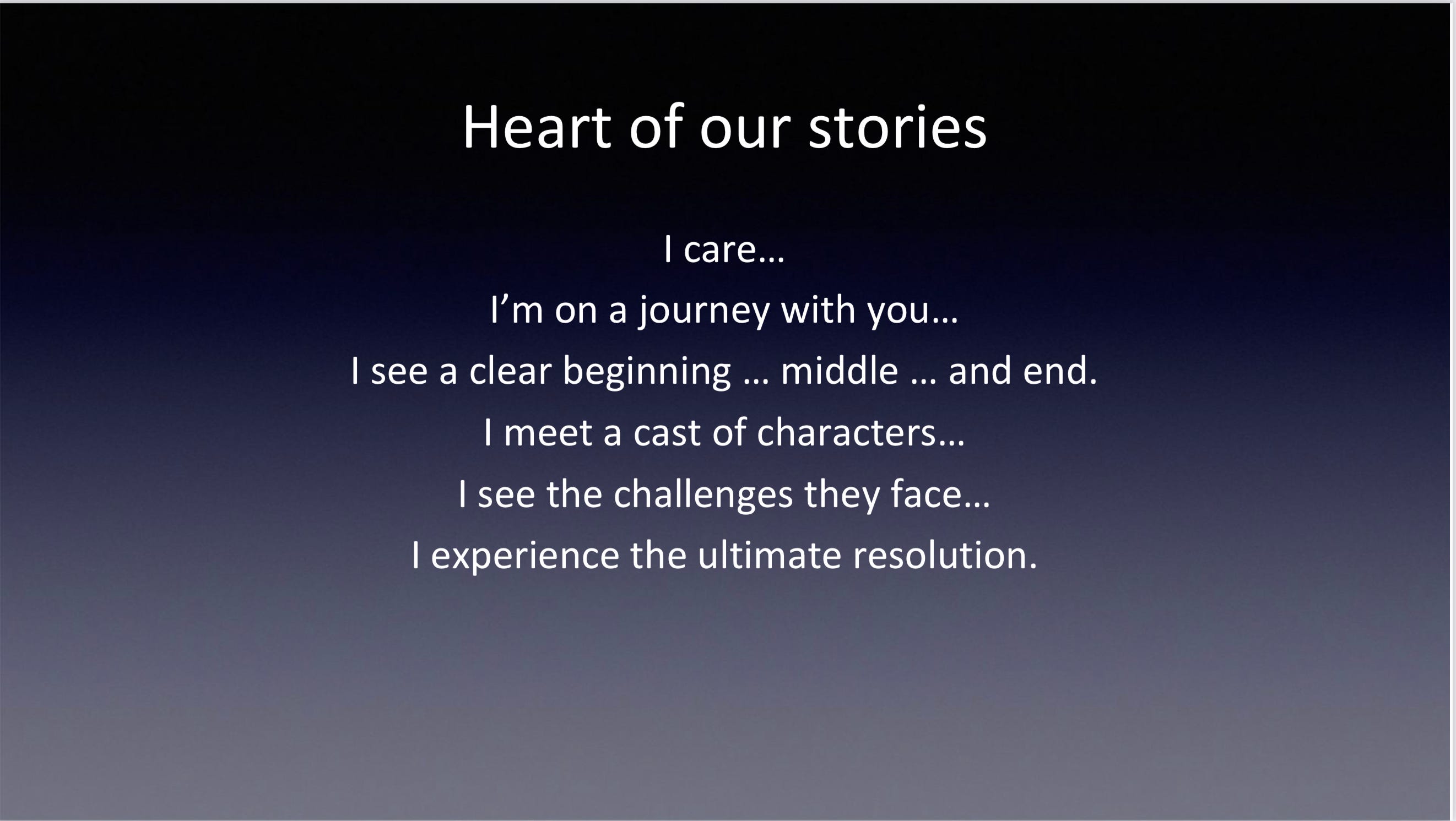
The A-B-T framework discussed in Part 1 introduces a simple 3-part story-structure and introduces an element of tension or conflict.
Act 1: And…
Act 2: But…
Act 3: Therefore.
And allows you to hit two main points about your research. Focus on a relevant fact for the synthesis study. Or focus on an aspect of your topic you have researched for years but is new and interesting to your audience.
But introduces conflict! This is the heart of narrative storytelling. We transition away from the world as we knew into the reason why this research is necessary.
Therefore is a synthesis word that ties your goals together and promises to deliver a “resolution” to your audience. In this portion, address how your research will solve the problem articulated in the “But” statement. Your work may not be resolved, but by incorporating a resolving statement you can generate a connection between your work and your audience.
Stories are also characterized by their plot!
All good stories have a plot! Have you ever seen the Disney-Pixar animated film Wall-E? The movie has very little spoken dialogue but, even without words, you follow a very clear plot-line and a very clear story.
Understanding The Seven Basic Plots by Glen Strathy is a great summary of Christopher Booker's book, The Seven Basic Plots: Why we tell stories.
When you are struggling with a story, it can be helpful to look at the well-worn paths created by successful authors, because it can help you avoid most of the pitfalls you could stumble into otherwise. And, to be fair, Booker's theories are not quite as limiting as his title suggests for the following reasons...
A. Despite calling the book, The Seven Basic Plots, Booker actually identifies nine basic plots. These are...
Overcoming the Monster: in which the hero must venture to the lair of a monster which is threatening the community, destroy it, and escape (often with a treasure).
Rags to Riches: in which someone who seems quite commonplace or downtrodden but has the potential for greatness manages to fulfill that potential.
The Quest: in which the hero embarks on a journey to obtain a great prize that is located far away.
Voyage and Return: in which the hero journeys to a strange world that at first is enchanting and then so threatening the hero finds he must escape and return home to safety.
Comedy: in which a community divided by frustration, selfishness, bitterness, confusion, lack of self-knowledge, lies, etc. must be reunited in love and harmony (often symbolized by marriage).
Tragedy: in which a character falls from prosperity to destruction because of a fatal mistake.
Rebirth: in which a dark power or villain traps the hero in a living death until he/she is freed by another character's loving act.
Rebellion Against 'The One': in which the hero rebels against the all-powerful entity that controls the world until he is forced to surrender to that power.
Mystery: In which an outsider to some horrendous event (such as a murder) tries to discover the truth of what happened.
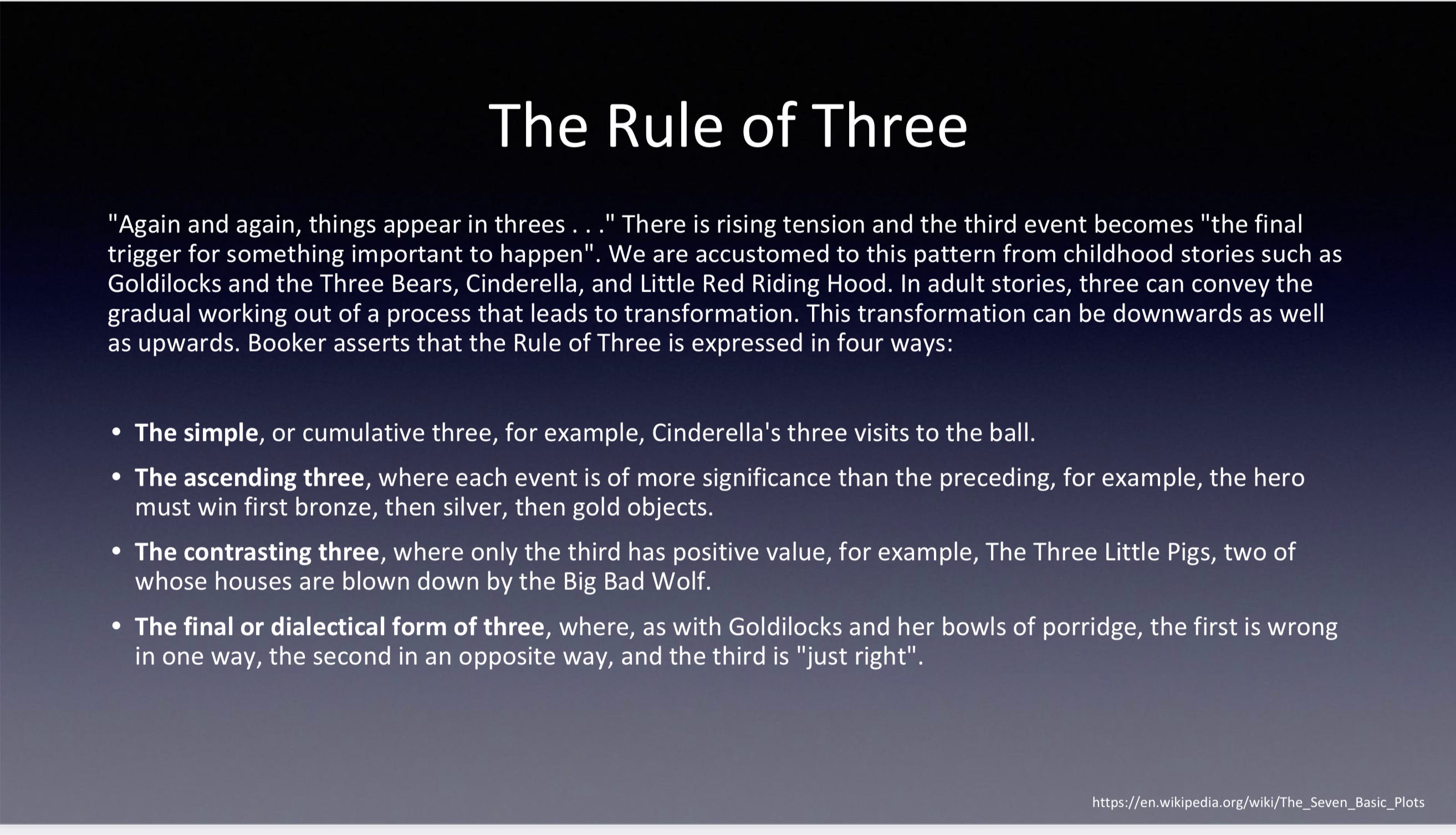
The Rule of Three is also prominent:
Telling a Technical Story
Check out this short Ted Talk and reflect on how the speaker uses the A-B-T framework along with a basic plot and the Rule of Three.
Does the speaker employ one of the “Basic Plots?”
Does he leverage A-B-T?
Do you think this presentation is “sticky”? Why or why not?
Use the comment button below to respond!
The TED talk was interesting due to its use of sound. It pulls you into the setting the speaker wants in a fairly intense way. Sound is not often utilized by presenters other than with videos, this usage alone makes the presentation sticky. The ABT frameworkworked well for me, though some of the speakers points I hoped they explained more. However I can see how only giving a small view of the project could draw interest to do personal research.
The plot seemed to be “overcome the monster”, as everyone else has stated. This plot doesn’t seem to fit perfectly, but it was the closest available.
Loved this introduction—the use of sound is something that's often overlooked in formal presentation and I think this soundscape really brought the audience into the scene. The plots are, to echo my classmates, to 'overcome the monster.' The ABT framework was successfully used through a streamlined storyline that was easy to follow. I do wish he dug into the future of this project a bit more as well as how he could apply preventative measures/alternative livelihoods for those who are illegally logging. The solution doesn't just lie with cell phones...it lies with providing a viable and empowering alternative. That being said, I am impressed by the project!